A new school year is here. While many parents are taking their kids shopping for Paw Patrol backpacks and stocking up on notebooks and pencils, the parents of students with disabilities are approaching the 2026-2027 school year with caution and some trepidation.
The Trump Administration’s efforts to dismantle the U.S. Department of Education are the cause for much of this anxiety. While the Education Department has not yet been completely dismantled (that would need to be done by Congress), it is “handing off two of its most important functions,” the AP reported in June, “special education and civil rights.” Special education is to be overseen by the Department of Health and Human Services and civil rights enforcement is to be handled by the Department of Justice.
What this means is not yet clear.
The Education Department met with disability advocates in July, insisting that students who need special education services would not be negatively affected. Advocates, however, did not leave that meeting feeling reassured.

For one thing, special education, one of the Education Department’s major functions, is being moved to an HHS that has experienced significant cuts. There is legitimate concern about capacity. Such a move may also make it more difficult to enforce laws like the Individuals with Disabilities Education Act (IDEA).
According to NPR, “IDEA is one of the primary ways the federal government contributes to educating disabled students. The law enshrines the right of every child to ‘a free and appropriate public education,’ and it says students with disabilities have a right to individual education programs (IEPs) that lay out the services each child is entitled to. IDEA is also the vehicle through which the federal government sends money to schools to help pay for those services.”
There is grave concern that the federal government is seeking to move the very framework of special education without a “clear and transparent plan” for what that will look like or how it will function.
“Advocates worry the movement of key functions to other agencies will complicate the process for enforcing disability and civil rights,” the AP reports. “Currently, for example, if a student with a disability is denied school accommodations, her parents can often appeal to a single federal agency — the Education Department — to handle the violation. Now, parents might have to navigate multiple bureaucratic systems to get answers.”
In addition to a worry about increased bureaucracy, there’s a worry about HHS handling special education. HHS is led by Robert F. Kennedy Jr. who has expressed troubling beliefs about autism and ADHD, raising fears that students' educational needs will be secondary to, or compromised by, the priorities of HHS.
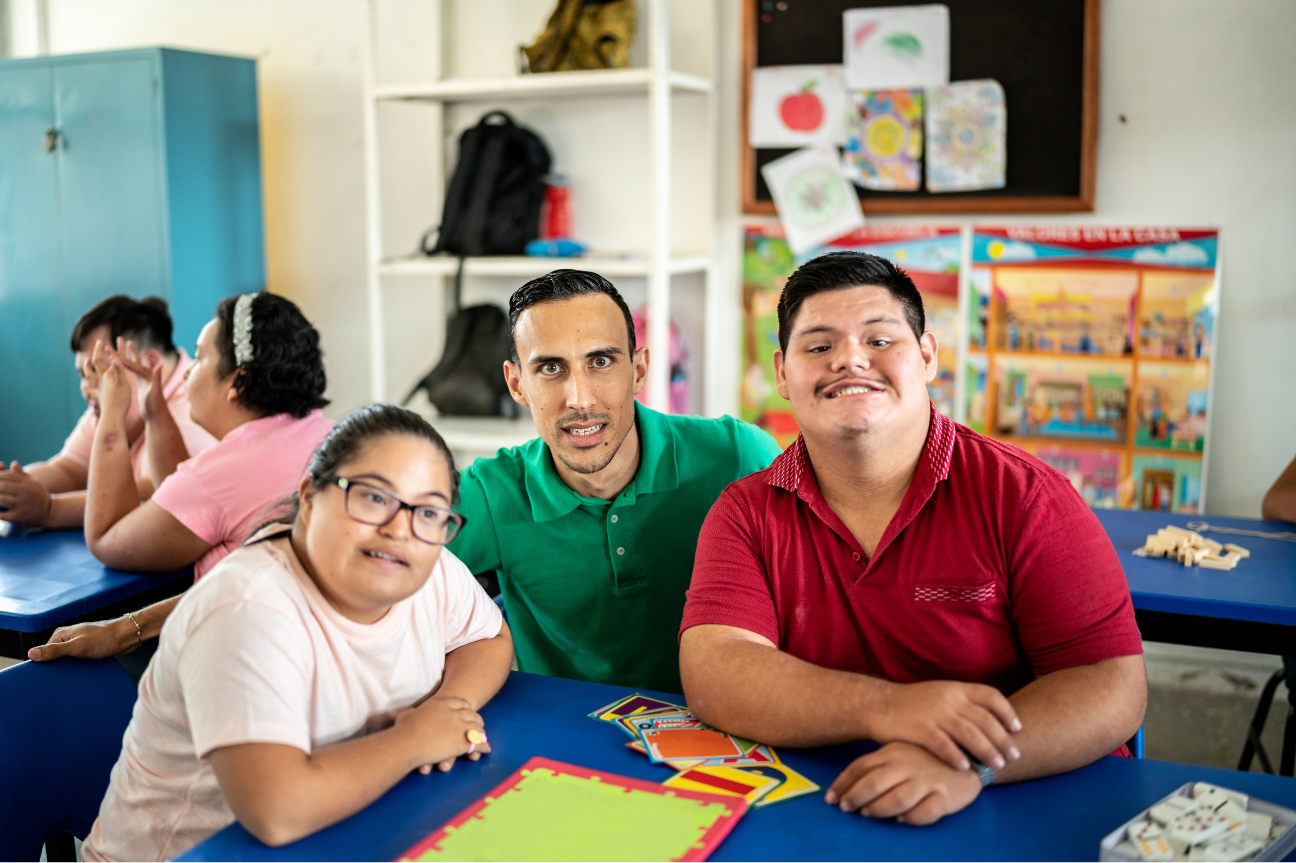
Robyn Linscott, director of education policy at The Arc of the United States told The AP that she feared that HHS may use a medical model rather than one focused on the educational needs of students with disabilities.
“[In a medical model,] disability is treated as a diagnosis to manage instead of a natural part of human life,” Linscott said. “When that mindset drives education decisions, students are more likely to be segregated, underestimated or treated as separate from the school community.”
That is, of course, the last thing that we want. Advocates have been fighting for years to ensure that students with disabilities not only get the “free and appropriate public education” they’ve been promised, but that they are also treated as members of the school community rather than hidden away.
It goes without saying that MISILC wants students with disabilities to be protected by the law and afforded whatever supports they need to receive an education. Regardless of the Trump Administration’s intentions, dismantling the very department responsible for protecting these students produces a lot more questions than answers about how this is supposed to be accomplished or if it will be accomplished at all.